
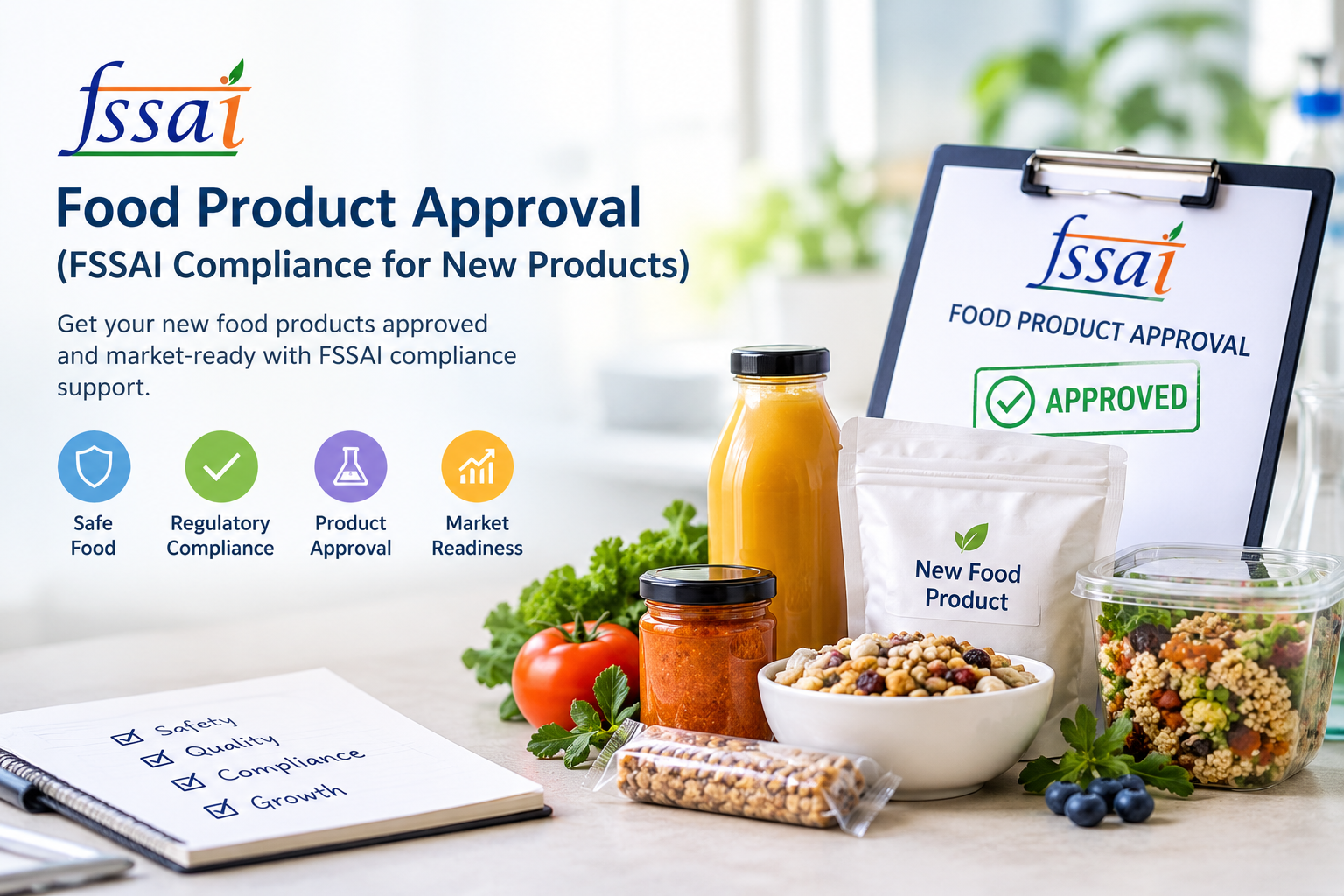
You’ve spent months perfecting a new recipe, a new snack, or a new health drink. The packaging looks great, and the first batch is ready. Then someone asks, “Has FSSAI approved this?”…
You’ve spent months perfecting a new recipe, a new snack, or a new health drink. The packaging looks great, and the first batch is ready. Then someone asks, “Has FSSAI approved this?” and the room goes quiet.
If that sounds familiar, you’re not alone. Food product approval is the step most new food brands either skip or leave until the last minute, and it’s often the one that delays a launch by months. At FSSAI Certificate, we help food business owners sort this out early, so approval becomes part of the plan instead of a nasty surprise.
This page explains how FSSAI compliance for new products works in plain language: who needs it, which documents you’ll need, how the application moves forward, and where we can take the load off your shoulders.
Get a Free Product Assessment
Tell us about your product and we’ll honestly tell you whether it needs approval.
Launching a New Food Product?
Get expert assistance with food product approval and FSSAI compliance.
What Is Food Product Approval?
Most packaged foods in India fall under the standards FSSAI has already written down: biscuits, bread, dairy, edible oils, and so on. If your product fits one of those standards, you generally don’t need special permission beyond your normal licence.
But food keeps evolving. Plant-based meat, new protein blends, herbal extracts, and exotic imported ingredients don’t always have a standard waiting for them. FSSAI calls these non-specified foods, and they’re covered under the Food Safety and Standards (Approval for Non-Specified Food and Food Ingredients) Regulations, 2017.
In simple words, food product approval means getting FSSAI’s written go-ahead before you make, store, sell, distribute, or import such a product. This non-specified food approval rests on a safety review. FSSAI looks at your ingredients, your process, and your label before it decides.
The usual route is an application in the prescribed format, filed through FSSAI’s online portal along with the government fee. If the authority is satisfied, it issues an approval, sometimes with conditions attached. The FSSAI product approval process isn’t impossible, but it does reward people who prepare properly.
Which Products Need Food Product Approval?
Here’s a rough guide. Your product may need approval if it:
- Contains a novel ingredient with no history of use in India
- Uses a new technology or process that meaningfully changes the product
- Is a fresh blend of nutraceutical or functional ingredients
- Includes an additive, enzyme, or ingredient with no existing standard
- Is imported and doesn’t match any current FSSAI standard
Think herbal extracts in beverages, algae-based proteins, fermented ingredients, and unusual supplement formats. If you’re unsure, that uncertainty alone is worth a conversation.
Some label claims can need prior approval, so don’t assume your claim is automatically safe. Check before it goes on the pack.
Which Products Don’t Need It?
Not everything does. A regular namkeen, a standard jam, or packaged atta that follows existing standards usually doesn’t need food product approval. What it does need is the right license, and that’s where FSSAI registration or a state or central licence comes in. Once that’s granted, you receive your FSSAI certificate, which you must display where you do business.
It’s an easy mix-up to make. A licence and food product approval are two separate things, and having one doesn’t replace the other.
Why You Shouldn’t Launch First and Ask Later
We understand the temptation. Sales targets are real, and investors like to see full shelves. But launching a product that needed prior approval can lead to serious trouble: seized stock, penalties, forced recalls, and a damaged reputation that no ad campaign can repair.
Getting Food Product Approval early gives you something more useful than safety. It gives you confidence. You can plan production, finalize labels, and talk to distributors without wondering what happens if someone asks for papers. Brands that treat FSSAI compliance for new products as a launch task, rather than a legal chore, usually move faster in the long run.
What FSSAI Looks At During Review
When your file reaches FSSAI, safety comes first and everything else second. For any food product approval, reviewers want to understand what the product is made of, how it’s made, who it’s meant for, and how much of it a person might eat.
The consumer group matters more than people expect. A snack for adults is judged differently from a drink aimed at children or a supplement for pregnant women. Dosage, intended use, and warning labels all come under the microscope.
A clear, honest file makes non-specified food approval smoother. That’s why we always run a mock review before anything is submitted.
How the Approval Journey Works, Step by Step
Here’s how it usually runs when we handle it for you.
- Product review. We study your formula, ingredients, and process, then tell you whether non-specified food approval is actually needed. Sometimes it isn’t, and we’ll say so.
- Gap check. We spot missing safety data, unclear ingredient sources, or label problems before FSSAI does.
- Dossier preparation. We put together your composition details, manufacturing process, safety evidence, intended use, and proposed label in one clean application.
- Online filing. We submit through FSSAI’s portal and handle fee payment alongside you.
- Query handling. If FSSAI asks for more information, which is common, we draft the replies and track every response.
- Approval and next steps. Once food product approval comes through, we help you meet any conditions, update your licence details where needed, and get the product ready for market.
We can’t promise a fixed timeline. How long it takes depends on how complete your data is and how many questions the authority raises. What we can promise is that you’ll always know where your file stands during the FSSAI product approval process.
Documents You’ll Typically Need for Food Product Approval
Every product is different, but most applications need some version of the following:
- Valid licence details, or FSSAI registration details if you’re a smaller operator
- Detailed composition and ingredient list with quantities
- A short description of the manufacturing process
- Safety and toxicity data, where applicable
- Scientific reasoning behind unusual ingredient combinations
- Proposed label and intended use
- For imports, the country of origin and its approval status
Don’t worry if some of this isn’t ready. The FSSAI Certificate team can review what you have, and part of our job is telling you what’s missing and how to fill the gap.
Timeline and Costs: What to Expect
Time depends on your product’s complexity and how quickly you answer FSSAI’s questions. A simple, well-documented file moves faster than a bold, novel one. Treat any food product approval timeline you hear, including ours, as an estimate.
On costs, you’ll pay a government fee plus our service fee. We explain both before you commit, so there are no surprise charges halfway through the FSSAI product approval process. Ask for a quote and we’ll reply with a clear breakdown.
A Quick Example
Imagine a founder named Riya who creates a millet-based energy drink with a herbal extract. The recipe is lovely, but the extract has no standard under existing FSSAI rules. Without Food Product Approval, she can’t legally sell it.
She comes to us before printing labels. We review the formula, confirm that non-specified food approval is needed, and build her file. FSSAI raises two queries, which we answer with supporting data. Months later she launches, with her paperwork in order and her FSSAI certificate on the wall.
It’s simply the FSSAI product approval process, done in the right order.
How FSSAI Certificate Helps
At the FSSAI Certificate, we begin with a conversation, not a form. You explain what you’ve made and where you want to sell it. We explain what the rules likely mean for you in language you don’t need a lawyer to decode.
From there, we handle the heavy lifting: dossier preparation, portal filing, and follow-ups and replies to queries. You stay informed at every step, and you’ll never have to chase us for updates.
Many clients also need help with the basics around the product. That might mean applying for FSSAI registration for a new unit, moving up to a state licence, or renewing one that has expired. Because we handle licensing too, you don’t have to juggle three different advisors. You can see everything we offer on our services page.
Good Food Product Approval work should feel like having a knowledgeable friend on your side, one who happens to know the regulations well.
Talk to a Compliance Expert
Why Food Brands Choose FSSAI Certificates
Choosing a compliance partner is a trust decision, so here’s what you can expect from FSSAICertificate.com:
- Straight answers, even when the answer is “you don’t need this.”
- One team for licensing and FSSAI registration
- Plain-language updates, not legal jargon
- Support from the first idea to the final label
Other agencies treat Food Product Approval as a one-off task. We see it as the start of a long relationship. When you scale, add a new SKU or enter a new state, FSSAICertificate.com is still around to help. Our focus on FSSAI compliance for new products means we’ve seen the usual problems before and know how to avoid them.
Common Food Product Approval Mistakes We See
After working with many food brands, the same errors keep turning up:
- Assuming a licence is enough. A valid licence doesn’t cover a non-specified product. Food product approval is separate.
- Starting too late. People apply when labels are already printed and stock is packed. Begin during development, not after.
- Weak documentation. Vague process descriptions and missing safety data lead to repeated queries.
- Copying a competitor’s label. What worked for them may not work for you and may not even be compliant.
- Ignoring claims. Statements like “immunity booster” or “high protein” can trigger separate scrutiny.
Who Needs Our Food Product Approval Service?
We built this service at FSSAICertificate.com for people launching something genuinely new:
- Startups and D2C brands with an innovative product
- Manufacturers introducing a new ingredient or formulation
- Importers bringing in products that don’t match existing standards
- Cloud kitchens and online sellers moving into packaged foods
- Nutraceutical and supplement companies
Already holding your FSSAI Certificate? Great. That’s the foundation, and we build on top of it. If you see yourself in the list above, a short chat about FSSAI compliance for new products will save you a lot of guesswork.
Conclusion
Launching a new food product is exciting, and it should stay that way. The rules around non-specified foods can look heavy at first, but they’re manageable when you start early, keep your documents honest, and ask for help before problems appear.
Check whether your product needs approval, gather your paperwork, and don’t promise your first buyers a date until you’re sure. Do that, and you’ll avoid most of the headaches we see every week. The goal is simple: a safe product, a clean label, and a launch you don’t have to worry about.
Launching a New Food Product?
Get expert assistance with Food Product Approval and FSSAI compliance.
Frequently Asked Questions
No. It applies to non-specified foods and ingredients, meaning products with no existing FSSAI standard. A product that follows an existing standard usually needs only the right licence. We’ll check which side yours falls on.
The FSSAI product approval process varies. Complete data and clear answers to queries help a lot. We’d rather give you an honest range after reviewing your file than promise a number we can’t control.
In most cases, no. Non-specified food approval is prior approval, which means approval before you manufacture, sell, or import. Selling early can attract penalties.
Yes, a fee is payable with the application. The amount can change, so we confirm the current figure with you at the start. Our own service fee at FSSAICertificate.com is separate, and we share it upfront.
You’ll generally need a valid licence or registration details, so it’s best to have your FSSAI certificate in place first. If you don’t, we can help with FSSAI registration at the same time.
FSSAI publishes regulations and notices on its official website. You can manage licenses through the FoSCoS portal, and you can browse the latest list of applications and their status.
From documentation to final approval, our regulatory team handles the entire process for you.